Africa’s Most Beautiful Volcanic Landscapes You Need to See
Powerful volcanic eruptions shaped some of the world’s most breathtaking landscapes long before many of today’s cities, forests and national parks came into existence. Over millions of years, molten lava, collapsing craters and shifting tectonic plates created towering mountains, emerald crater lakes, vast lava fields and fertile valleys that continue to amaze scientists and travelers alike.
These volcanic landscapes are far more than geological wonders. Many support thriving ecosystems filled with rare wildlife, while others hold deep cultural and spiritual significance for nearby communities. Some volcanoes remain active, offering dramatic reminders that the Earth’s interior is still very much alive, while others have become peaceful destinations where hikers, photographers and nature lovers can experience spectacular scenery
From East Africa’s Great Rift Valley to the volcanic highlands of Central Africa, these remarkable destinations reveal another side of the continent one defined by raw natural beauty and unforgettable adventures.
1. Mount Kilimanjaro, Tanzania
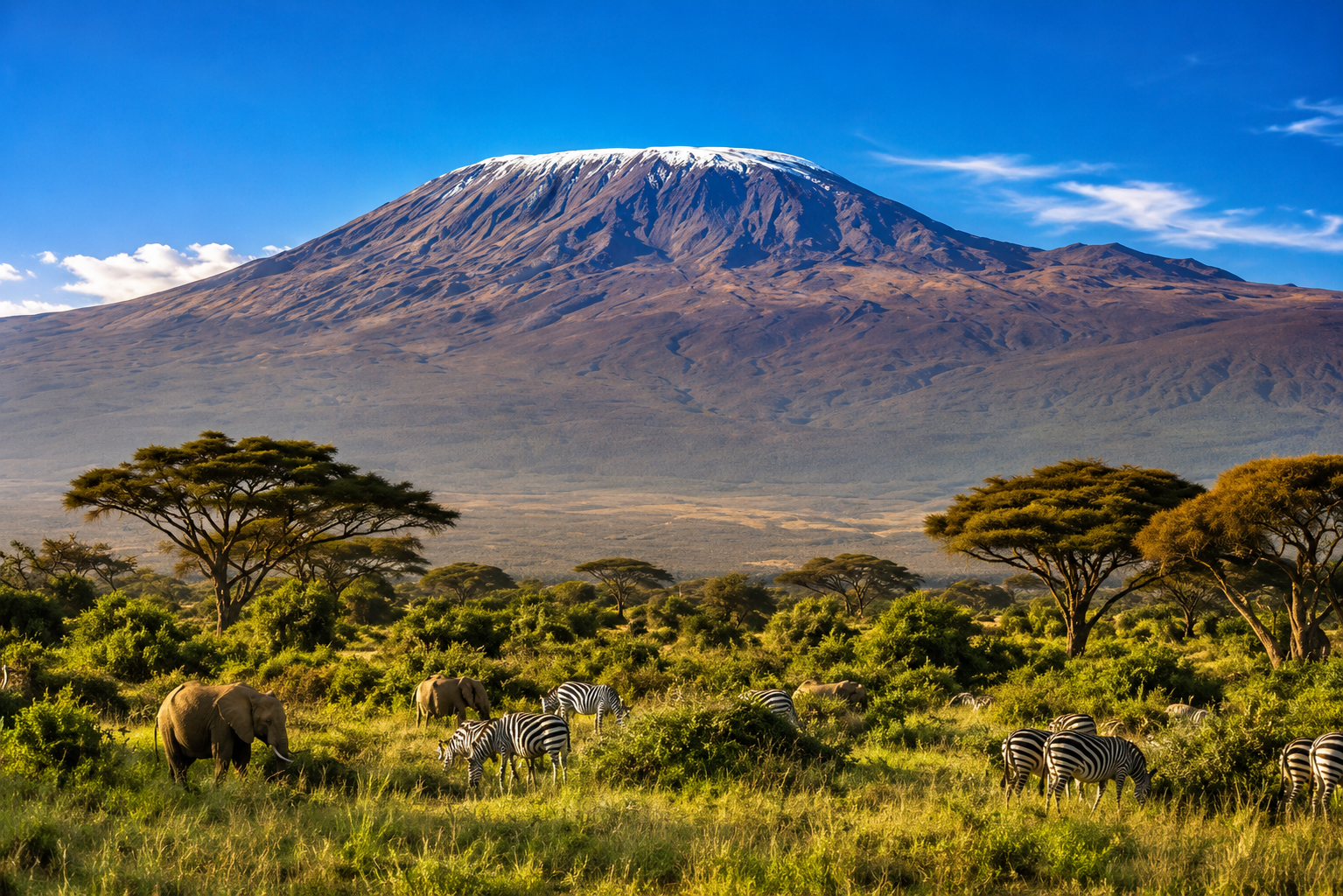
Standing at 5,895 meters (19,341 feet) above sea level, Mount Kilimanjaro is the highest mountain in Africa and one of the world’s most recognizable volcanic peaks. It consists of three volcanic cones Kibo, Mawenzi and Shira, with Kibo being the highest and dormant.
Climbing Kilimanjaro is unlike any other hiking experience. The journey passes through tropical rainforest, heathland, alpine desert, and eventually snow covered terrain near the summit. Few places on Earth allow visitors to experience such dramatic changes in climate and scenery within a single trek.
Recognized as a UNESCO World Heritage Site, Kilimanjaro attracts thousands of climbers each year and remains one of Africa’s most iconic natural landmarks.
2. Ngorongoro Crater, Tanzania
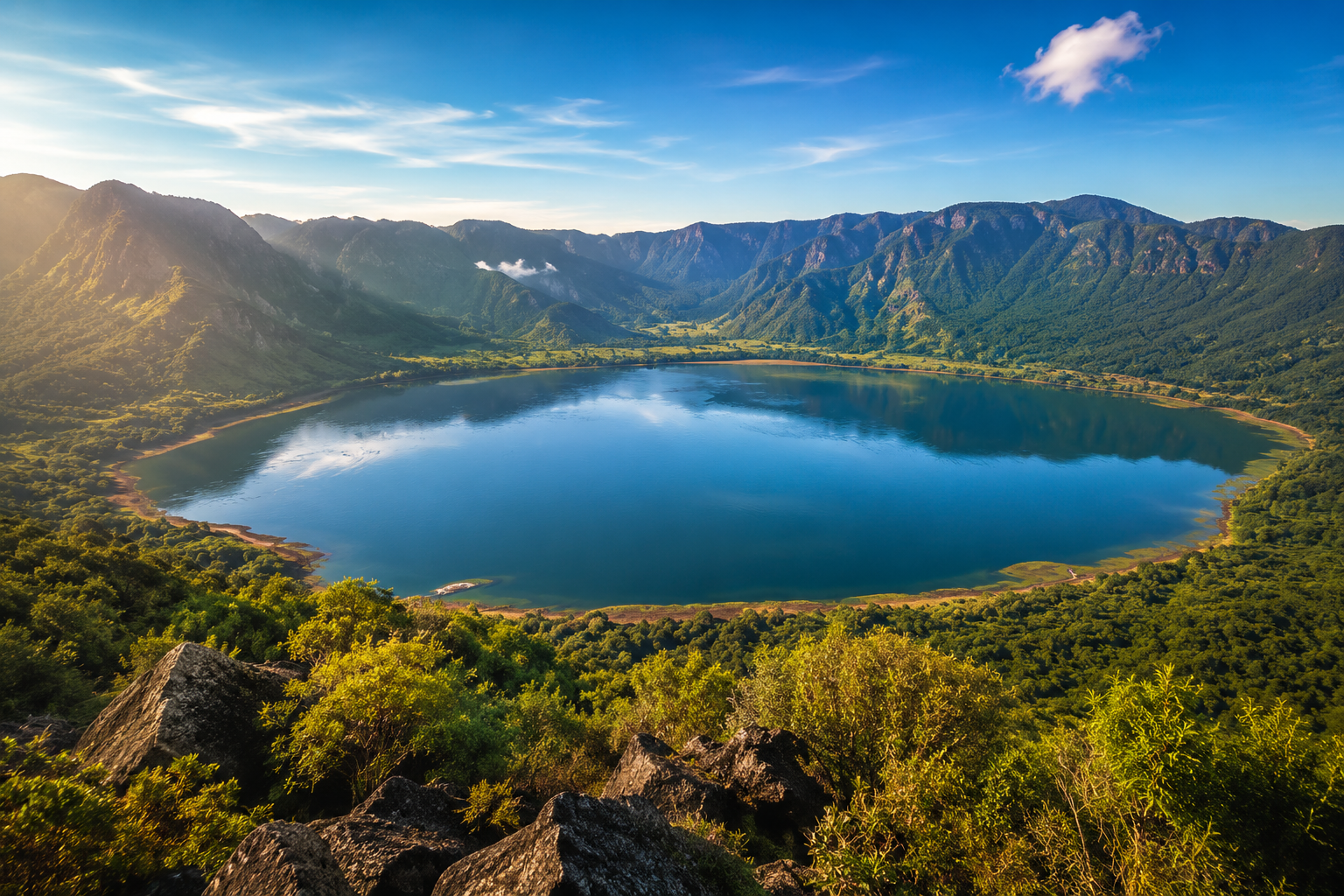
The Ngorongoro Crater is one of the largest intact volcanic calderas on Earth. It formed when an enormous volcano erupted and collapsed approximately two to three million years ago.
Today, the crater floor supports one of Africa’s highest concentrations of wildlife. Lions, elephants, buffaloes, zebras, wildebeest, hyenas, hippos and the critically endangered black rhinoceros all live within this remarkable natural enclosure.
The surrounding crater rim provides breathtaking panoramic views, making it one of Tanzania’s most photographed destinations.
3. Mount Cameroon, Cameroon
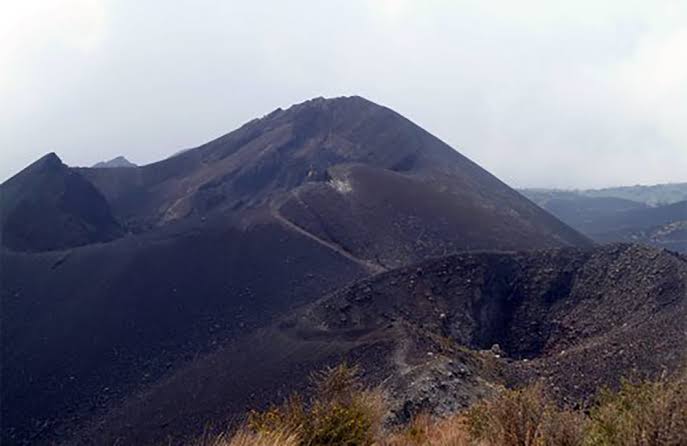
Rising dramatically from the Gulf of Guinea, Mount Cameroon is the highest mountain in West and Central Africa, reaching 4,040 meters (13,255 feet).
Unlike many volcanoes that have remained quiet for centuries, Mount Cameroon is still classified as an active volcano. Historical eruptions have shaped its rugged slopes, creating dramatic lava flows that contrast beautifully with lush rainforests below.
The mountain is also famous for the annual Mount Cameroon Race of Hope, an international endurance race that challenges athletes to climb and descend its steep volcanic slopes.
4. Nyiragongo Volcano, Democratic Republic of the Congo
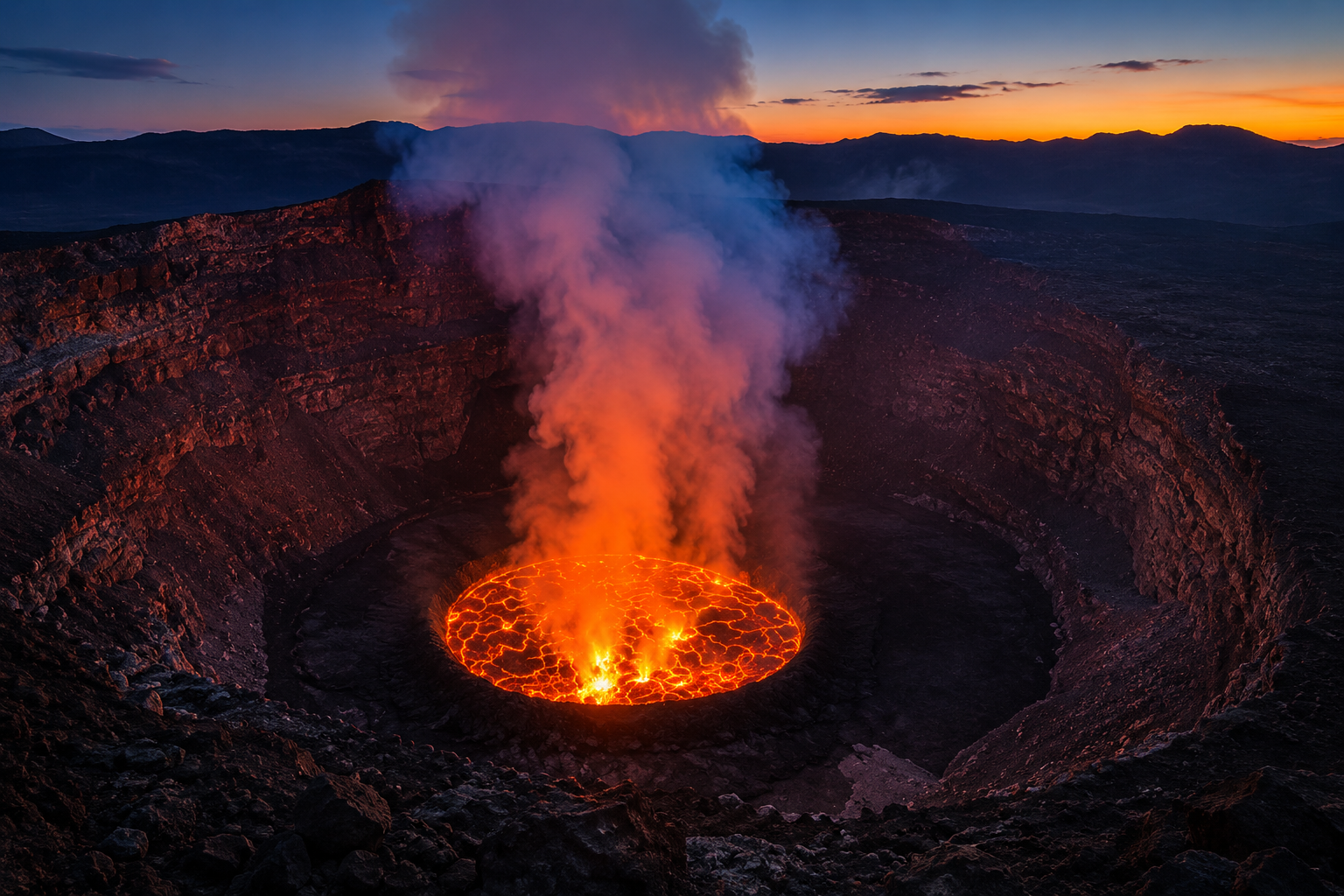
Few volcanoes are as visually striking as Nyiragongo. Located inside Virunga National Park, this active volcano contains one of the world’s largest persistent lava lakes. At night, the glowing molten lava creates an unforgettable spectacle visible from the crater rim.
Although volcanic activity is closely monitored and access depends on safety conditions established by park authorities, Nyiragongo remains one of Africa’s most extraordinary adventure destinations.
5. Nyamuragira Volcano, Democratic Republic of the Congo
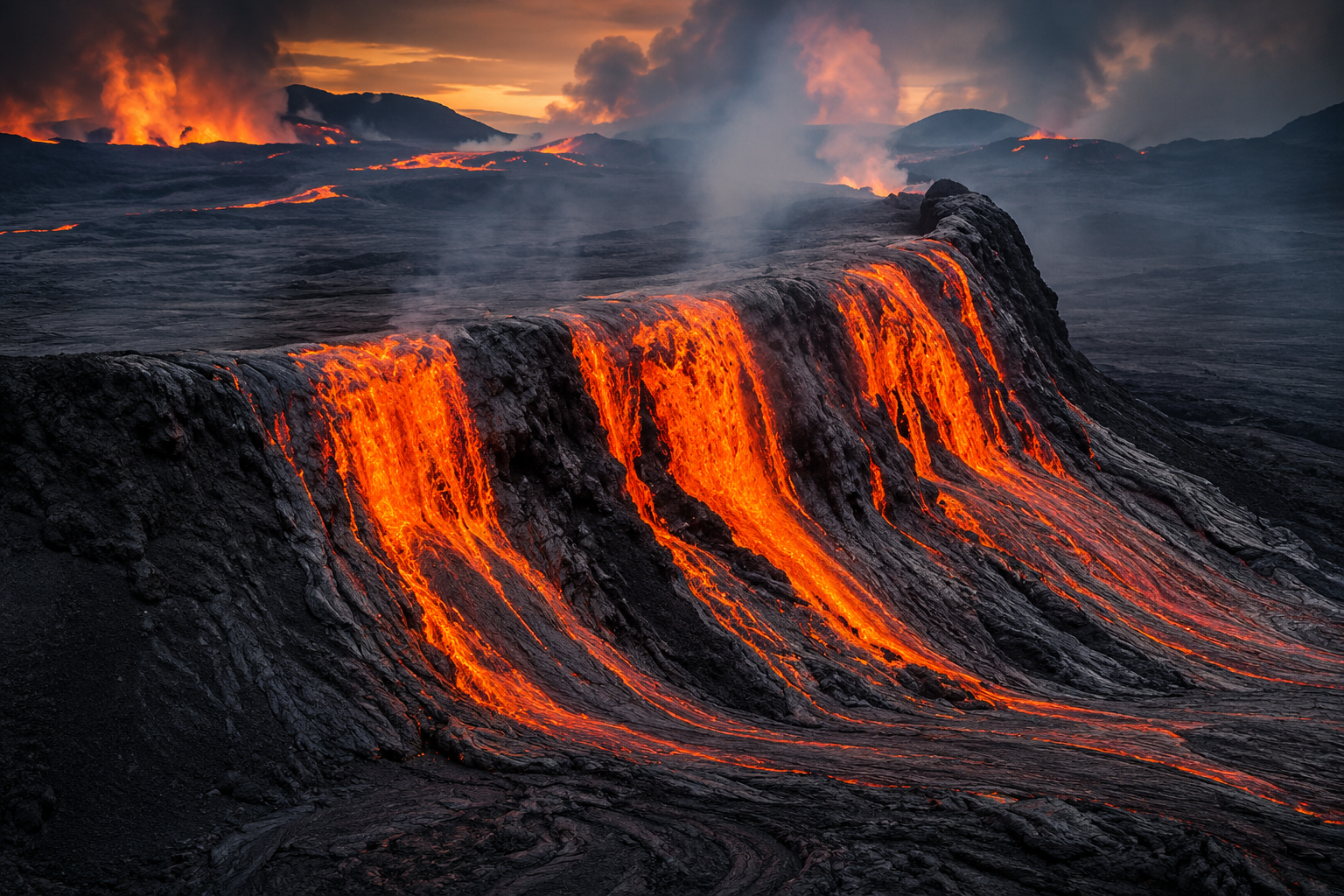
Just northwest of Nyiragongo stands Nyamuragira, another highly active volcano within Virunga National Park. Its frequent eruptions have produced vast lava fields that continue to reshape the surrounding landscape. Despite its volcanic nature, the area supports remarkable biodiversity, including elephants, buffaloes, primates and hundreds of bird species.
For geology enthusiasts, Nyamuragira offers a fascinating look at one of Africa’s most active volcanic systems.
6. Erta Ale, Ethiopia
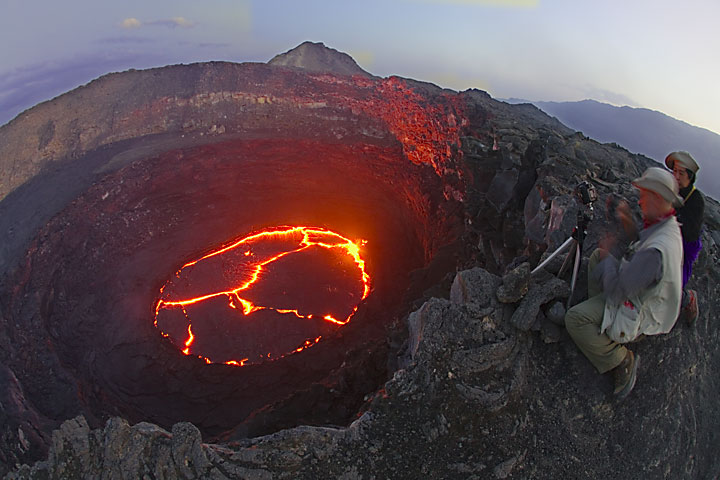
Deep within Ethiopia’s Danakil Depression lies Erta Ale, one of the few volcanoes on Earth known for its long-lived lava lake. The journey to Erta Ale is as memorable as the volcano itself. Travelers cross dramatic desert landscapes filled with hardened lava flows, colorful mineral deposits, salt flats and steaming geothermal vents before reaching the summit.
Watching glowing lava swirl beneath the night sky is an experience unlike any other and has made Erta Ale one of East Africa’s most remarkable geological attractions.
7. Ol Doinyo Lengai, Tanzania
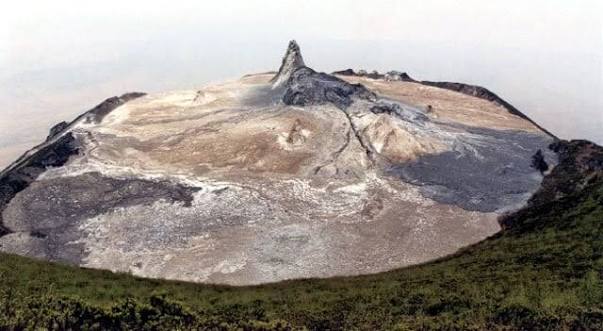
Known by the Maasai as the “Mountain of God,” Ol Doinyo Lengai is unlike any other volcano in the world. It is the only active volcano known to erupt natrocarbonatite lava, an extremely rare type of lava that is much cooler than ordinary lava. Fresh lava appears dark before turning white after exposure to the atmosphere.
Its spiritual importance to the Maasai people adds another layer of significance to this already extraordinary destination.
8. Mount Elgon, Uganda and Kenya
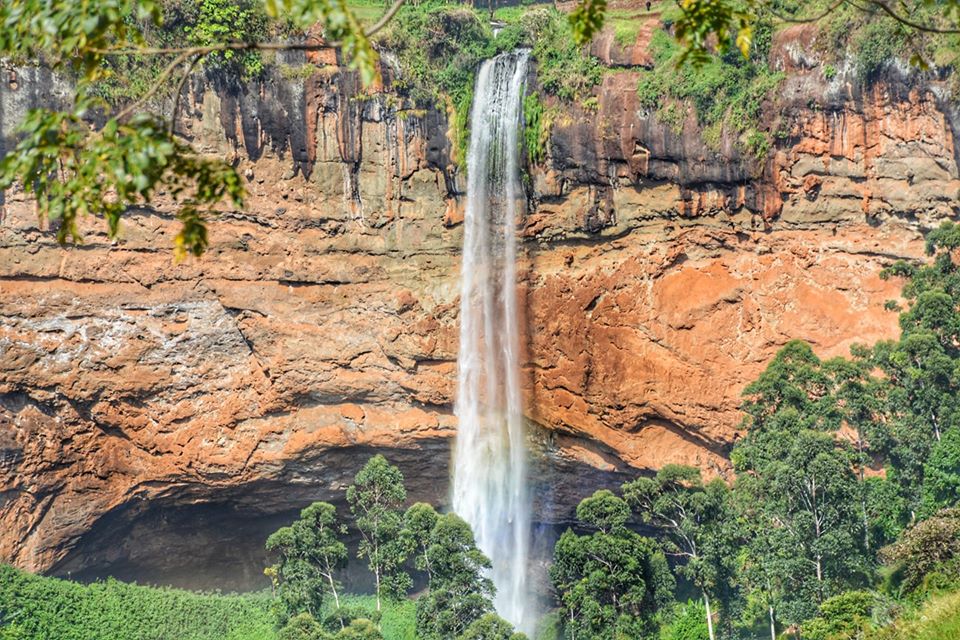
Long before erosion reduced its height, Mount Elgon was one of Africa’s tallest volcanoes. Today, this extinct shield volcano is famous for its enormous caldera, waterfalls, caves, bamboo forests and diverse wildlife.
The mountain is particularly attractive to hikers looking for a quieter alternative to Kilimanjaro while still enjoying spectacular volcanic scenery.
9. Menengai Crater, Kenya
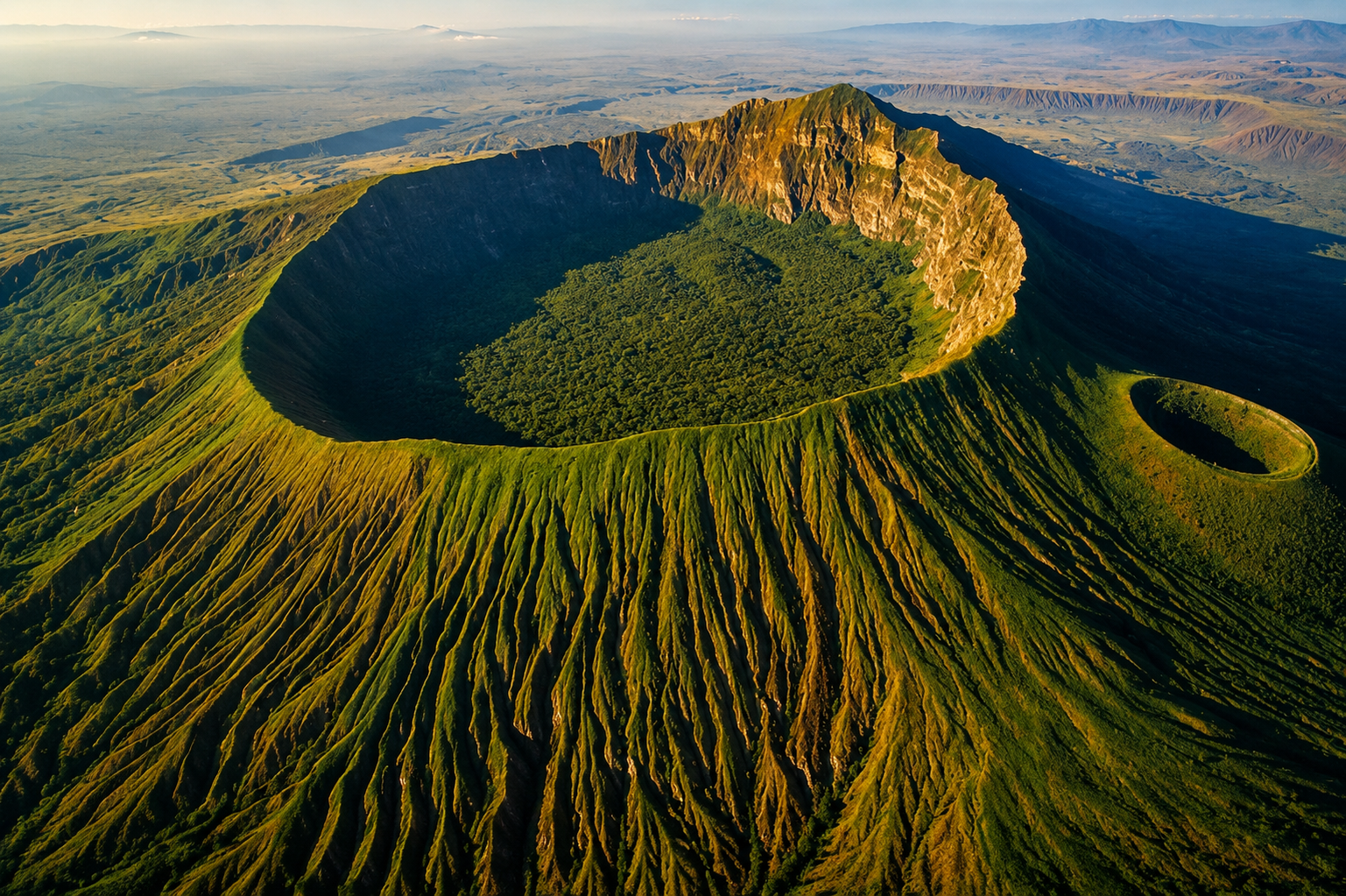
Just outside Nakuru lies Menengai Crater, one of Africa’s largest volcanic calderas. The crater stretches approximately 12 kilometers across and offers spectacular viewpoints overlooking forests, cliffs and the Great Rift Valley.
Visitors can hike around parts of the crater while enjoying dramatic landscapes shaped by ancient volcanic activity. The surrounding geothermal developments also highlight Kenya’s growing use of renewable energy.
10. Mount Longonot, Kenya
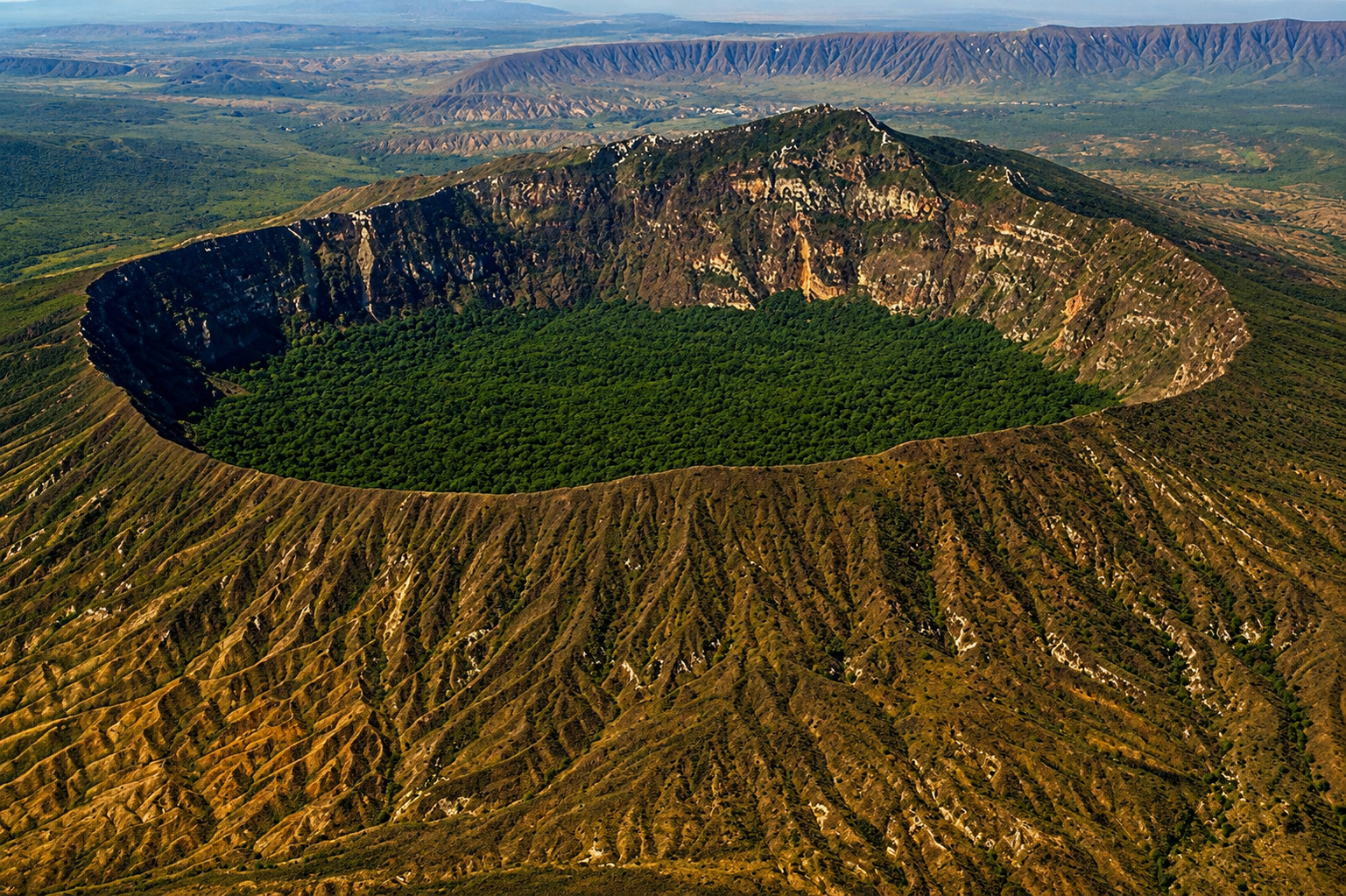
Mount Longonot National Park protects one of Kenya’s best known volcanoes. A relatively short but challenging climb leads hikers to the crater rim, where sweeping views reveal the Great Rift Valley, Lake Naivasha and surrounding volcanic terrain.
A lot of visitors continue around the crater’s circular rim, enjoying ever changing scenery from every direction.
11. Virunga Mountains, Rwanda, Uganda and the Democratic Republic of the Congo
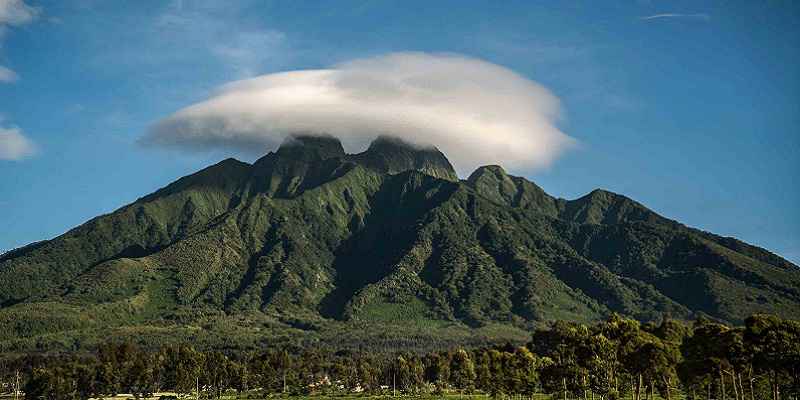
Stretching across the borders of Rwanda, Uganda and the Democratic Republic of the Congo, the Virunga Mountains form one of Africa’s most spectacular volcanic chains. The range includes eight major volcanoes, several of which are dormant while others remain active.
The mountains are best known as one of the last strongholds of the endangered mountain gorilla. Dense bamboo forests, mist-covered slopes, and volcanic ridges create an unforgettable landscape that combines dramatic scenery with extraordinary wildlife. Hiking, gorilla trekking, and birdwatching make the Virunga region one of the continent’s most rewarding adventure destinations.
12. Mount Bisoke, Rwanda
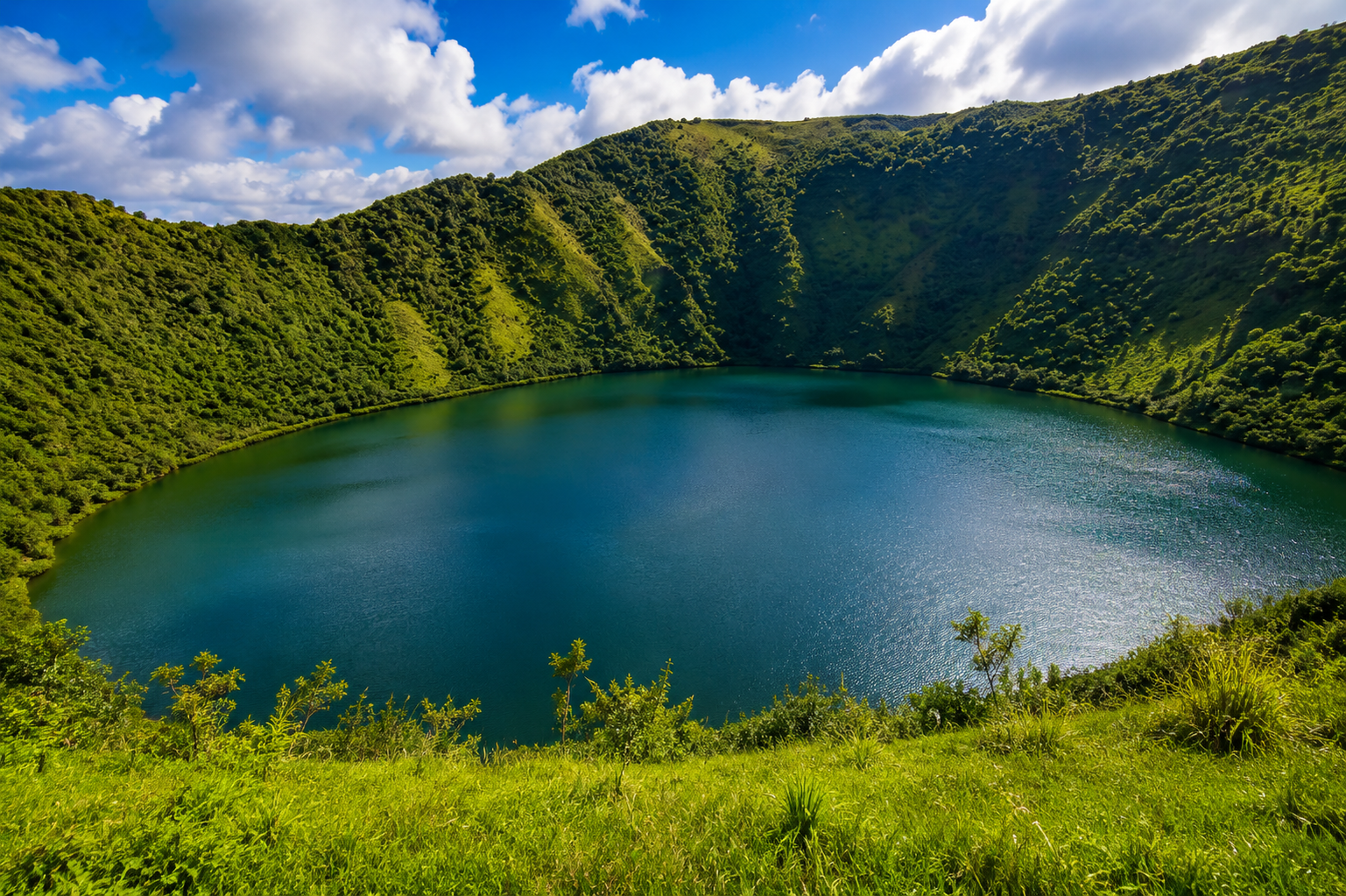
Mount Bisoke is one of the most popular hiking volcanoes in Volcanoes National Park. Although classified as an active volcano, it has remained quiet since its last recorded eruption in the mid20th century.
Its greatest attraction is the beautiful crater lake that fills the summit. The hike passes through lush rainforest, home to golden monkeys and mountain gorillas, before reaching breathtaking views across the Virunga Mountains.
The combination of volcanic scenery and rich biodiversity makes Mount Bisoke a favorite among nature lovers.
13. Mount Karisimbi, Rwanda and the Democratic Republic of the Congo
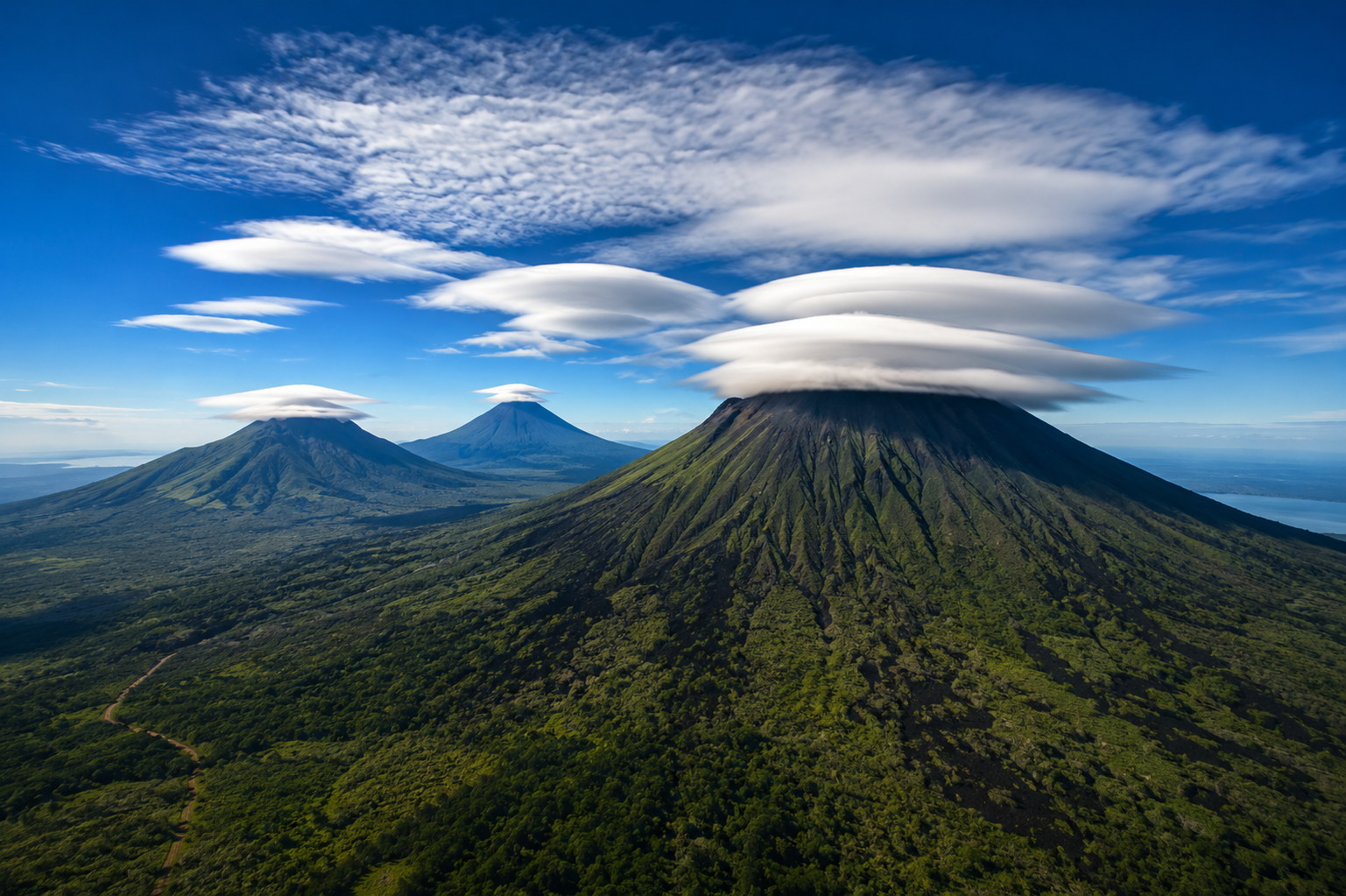
At 4,507 meters (14,787 feet), Mount Karisimbi is the highest volcano in the Virunga range. The challenging two-day trek rewards hikers with changing landscapes that include bamboo forests, giant heather, alpine meadows and rocky volcanic slopes. On clear days, the summit offers sweeping views across several countries.
Its name comes from the Kinyarwanda word amasimbi, meaning “white shell,” a reference to the snow or frost that occasionally appears on the peak.
14. Lake Chala Crater, Kenya and Tanzania
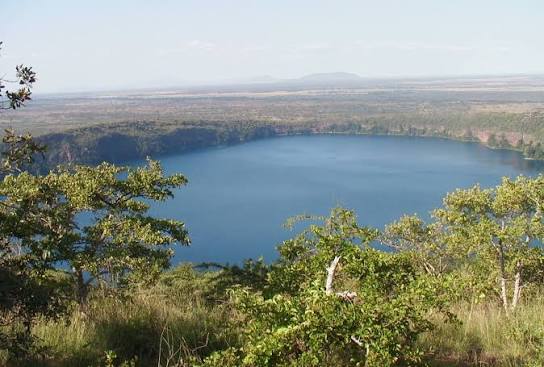
Hidden along the Kenya-Tanzania border, Lake Chala occupies a volcanic crater formed thousands of years ago. The lake’s deep blue and turquoise waters contrast beautifully with the steep green crater walls surrounding it. Walking trails along the rim provide excellent viewpoints, while kayaking and birdwatching offer quieter ways to enjoy the landscape.
Because it remains less crowded than many East African attractions, Lake Chala is ideal for travelers seeking peaceful natural scenery.
15. Crater Lakes Region, Uganda
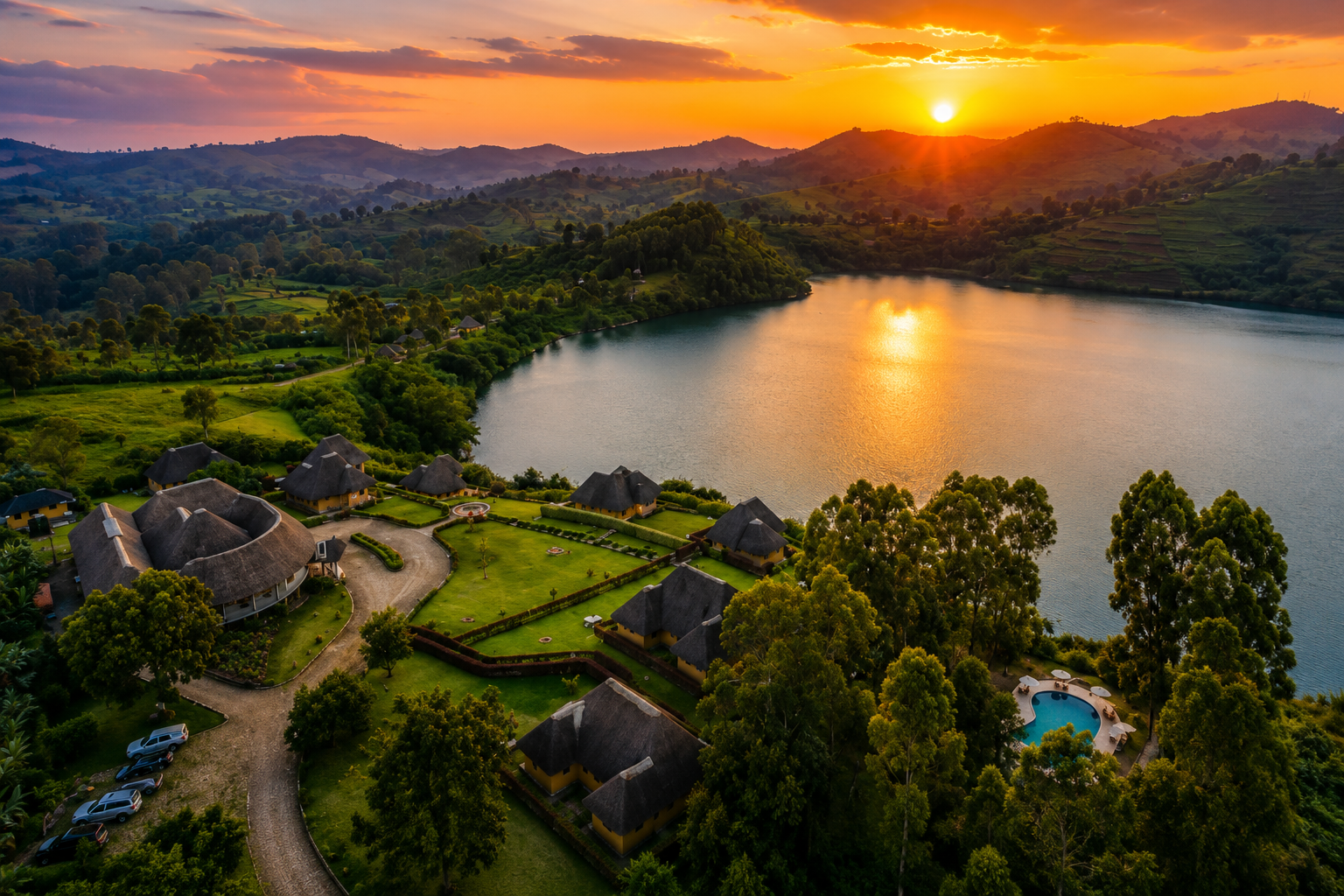
Western Uganda is dotted with dozens of crater lakes created by ancient volcanic explosions associated with the Great Rift Valley. Lakes such as Nyinambuga, Nkuruba, Nyabikere and Kyaninga are surrounded by rolling hills, tea plantations, forests, and traditional villages. The area is especially popular for hiking, canoeing, birdwatching and photography.
Sunrise and sunset transform the crater lakes into some of Uganda’s most picturesque landscapes.
16. Nabiyotum Volcano, Kenya
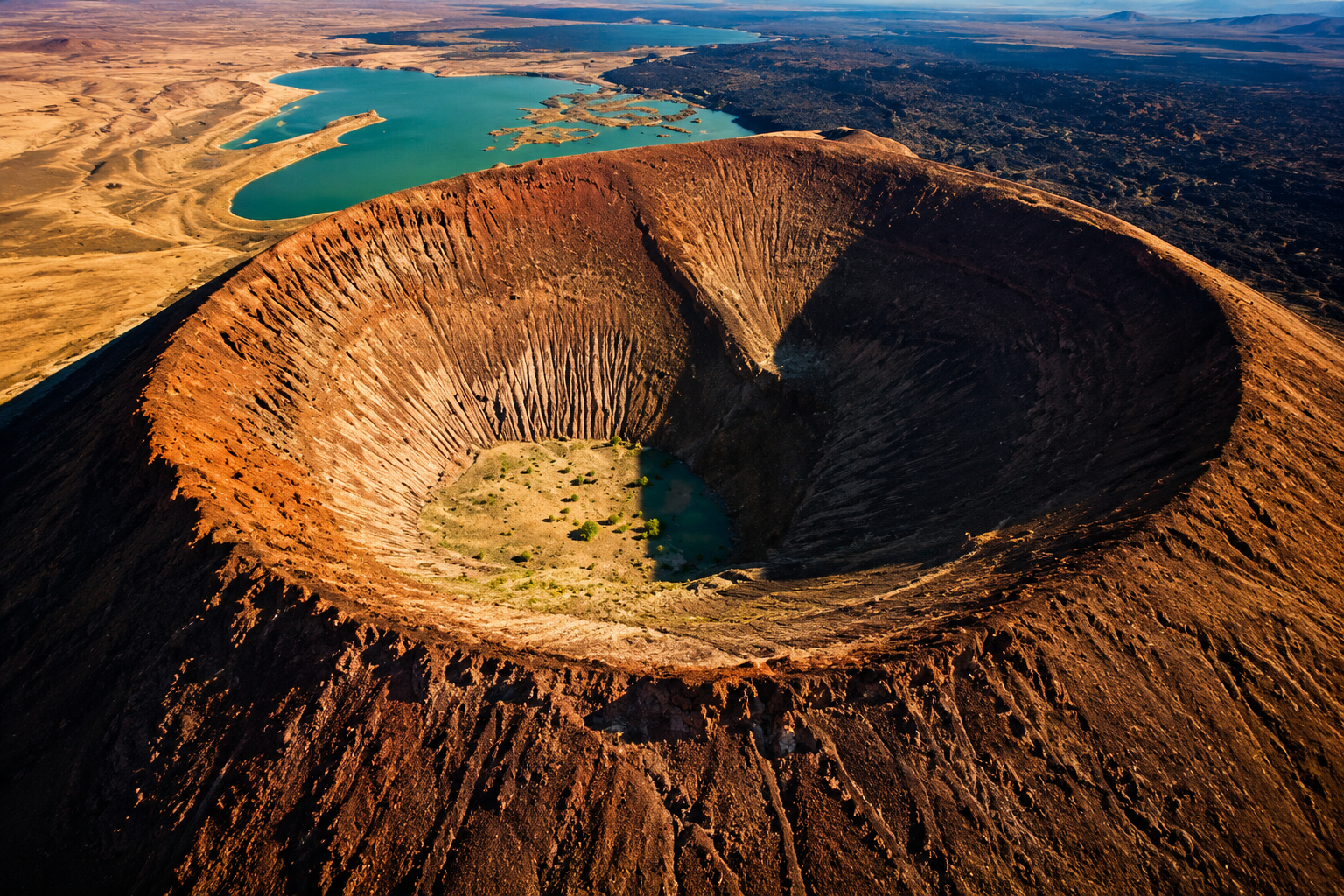
Standing on the southeastern shores of Lake Turkana, Nabiyotum Volcano rises dramatically from the surrounding plains. Though extinct, its volcanic cone dominates the landscape and serves as an important landmark in one of Kenya’s most remote regions. The surrounding scenery combines lava formations, desert vegetation and panoramic views of Lake Turkana, creating an unforgettable setting for adventurous travelers.
17. Mount Meru, Tanzania
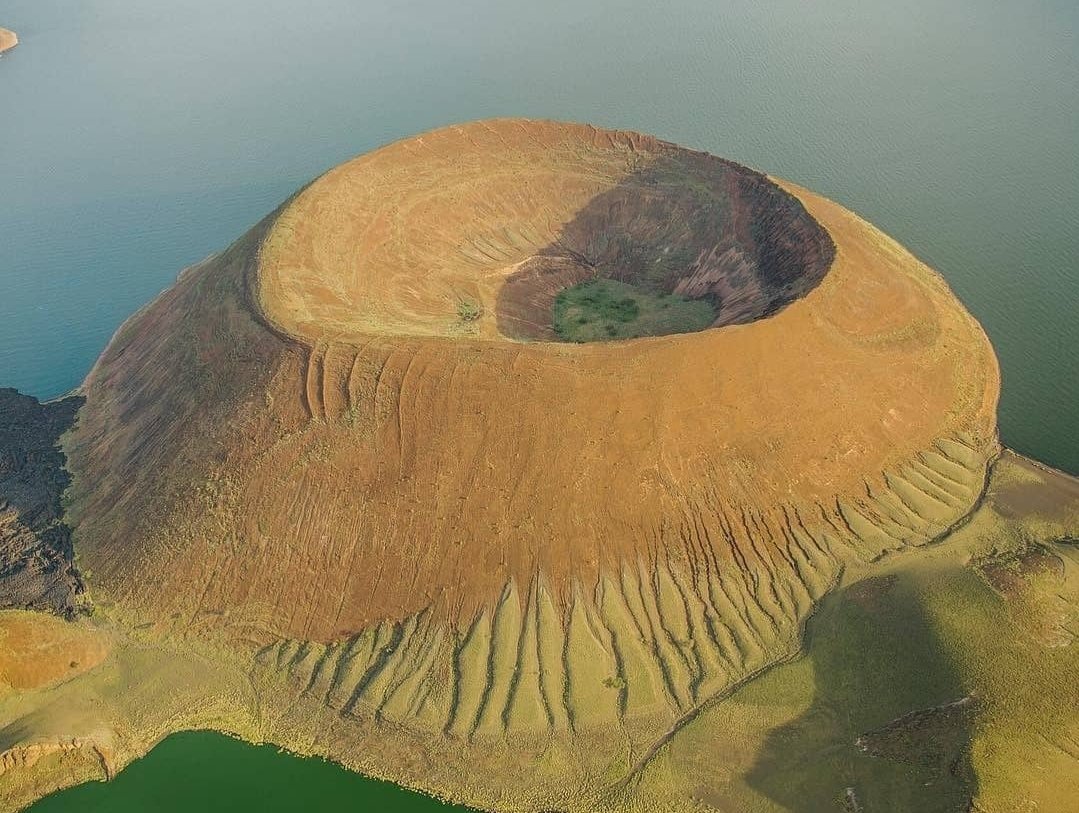
Often overshadowed by nearby Kilimanjaro, Mount Meru deserves recognition in its own right. Located within Arusha National Park, this dormant stratovolcano rises to 4,566 meters (14,980 feet), making it Tanzania’s second highest mountain
The climb passes through grasslands, dense forests and alpine terrain inhabited by giraffes, buffaloes, monkeys, and numerous bird species. Its dramatic horseshoe shaped crater, formed after a massive volcanic eruption, offers one of East Africa’s finest mountain views. So, it worth exploring.
18. Mount Suswa, Kenya
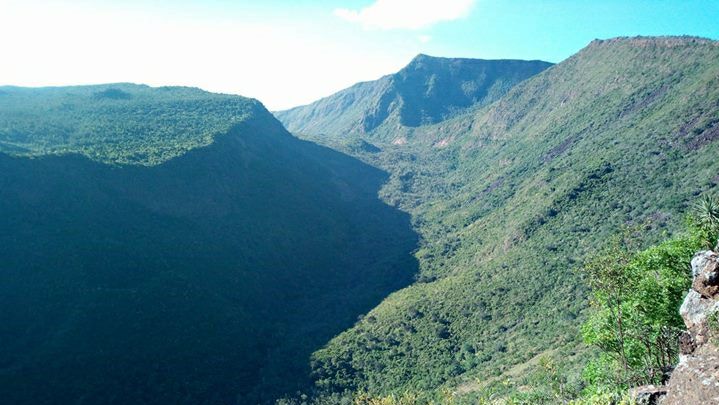
Mount Suswa is a fascinating shield volcano located in Kenya’s Great Rift Valley. It is famous for its double crater and an extensive network of lava caves, some of the longest in East Africa. The surrounding landscape supports zebras, giraffes, antelopes and many bird species.
Adventure travelers often visit Mount Suswa for hiking, cave exploration, camping and wildlife viewing.
19. Mount Marsabit, Kenya
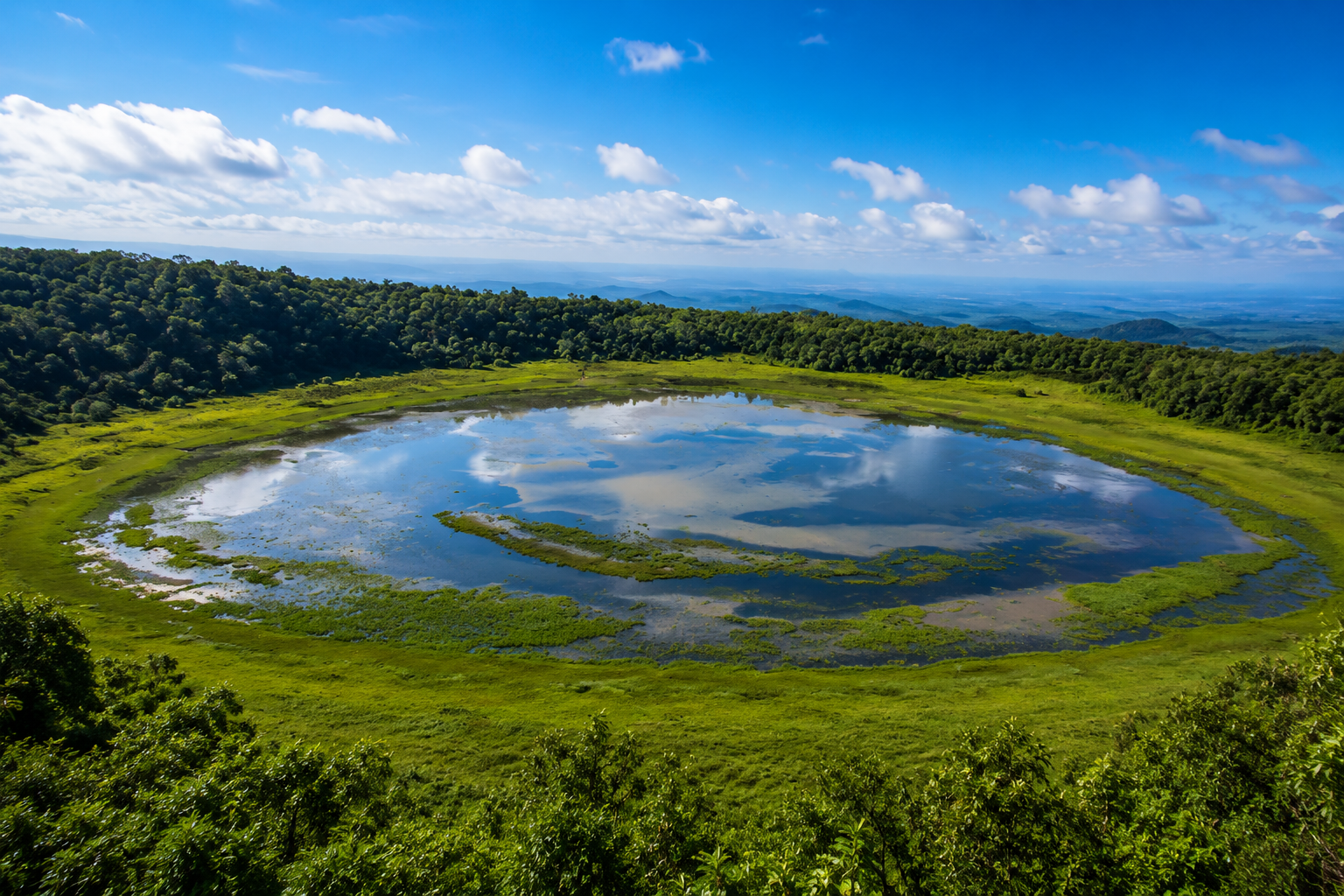
Rising unexpectedly from the arid landscapes of northern Kenya, Mount Marsabit is an extinct volcano surrounded by a surprisingly green forest. Several beautiful crater lakes lie within Marsabit National Park, attracting elephants, buffaloes, birds and other wildlife throughout the year.
The contrast between the lush volcanic forest and the surrounding semi-desert makes Mount Marsabit one of Kenya’s most distinctive natural attractions.
20. Mount Moroto, Uganda
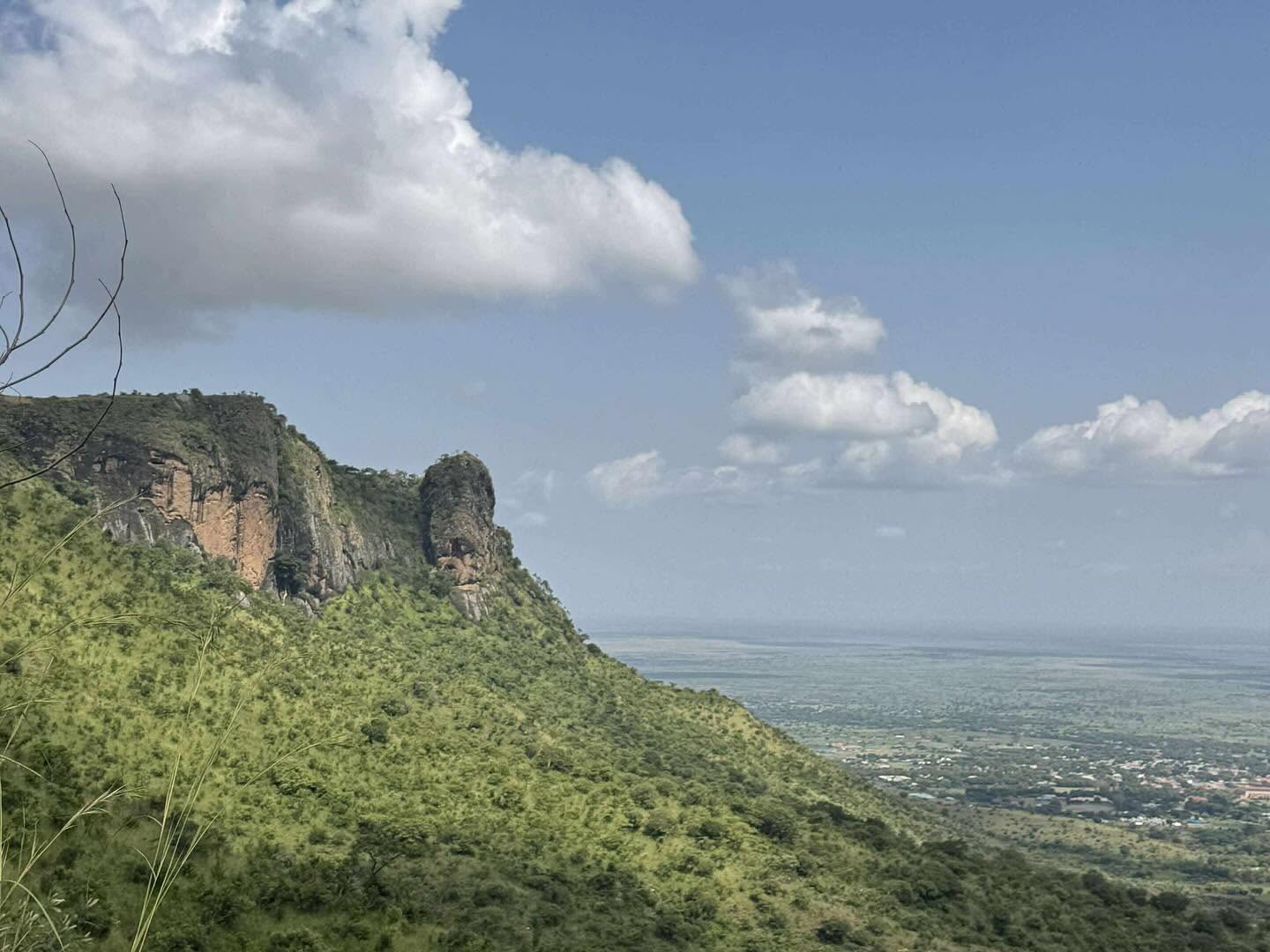
Located in northeastern Uganda, Mount Moroto is part of an ancient volcanic mountain range that dominates the Karamoja region. The mountain offers scenic hiking trails, rocky peaks, waterfalls during the rainy season and sweeping views across Uganda’s northeastern plains. It is also culturally significant to the local Karamojong communities, who have lived around the mountain for generations.
Although it receives fewer visitors than Uganda’s better-known destinations, Mount Moroto rewards travelers with peaceful scenery and an authentic wilderness experience.
Best Time to Visit Africa’s Volcanic Landscapes
Weather conditions vary depending on the destination, but the dry seasons generally provide the best opportunities for hiking and sightseeing.
In East Africa, the periods between June and October and December and February usually offer clearer skies and more favorable trail conditions. Travelers planning to visit active volcanoes should always check current safety updates and park advisories before departure as volcanic activity and access conditions can change.
Hiring experienced local guides is strongly recommended for mountain treks and volcanic expeditions, both for safety and to gain a deeper understanding of the area’s geology, wildlife and cultural significance.
Why These Landscapes Are Worth Visiting
Volcanic landscapes offer experiences that are difficult to find elsewhere. They combine towering mountains, crater lakes, wildlife, forests, lava fields and dramatic viewpoints in a single destination.
Lot’s of volcanic regions are also protected as national parks or UNESCO World Heritage Sites, helping preserve both their natural beauty and ecological importance. Beyond their scenic appeal, these landscapes support unique plant and animal species while providing valuable insight into Earth’s geological history.
For photographers, hikers, wildlife enthusiasts, and adventure travelers, they represent some of the most rewarding destinations on the continent.
Conclusion – Africa’s Most Beautiful Volcanic Landscapes You Need to See
Volcanoes have played a powerful role in shaping a lot of Africa’s most extraordinary landscapes. From the snow covered summit of Mount Kilimanjaro and the wildlife filled Ngorongoro Crater to the glowing lava lake of Erta Ale and the misty peaks of the Virunga Mountains, these destinations showcase nature at its most dramatic
Each location tells a different story, one of ancient eruptions, remarkable ecosystems, cultural traditions and unforgettable adventures. Whether you’re standing on the rim of a vast caldera, trekking through volcanic forests or watching the sunrise over a crater lake, these landscapes reveal a side of Africa that is both beautiful and aweinspiring.
For travelers seeking unforgettable experiences beyond the usual tourist routes, these volcanic wonders deserve a place on every adventure itinerary. Make sure you always visit our website Pathcresta for more travel information and guides like this.

Mr Derek is the founder and editor of Pathcresta. He specializes in travel, tourism, and destination content, producing accurate, informative and practical guides that help readers explore attractions, plan trips and discover unique experiences across Nigeria and around the world.